
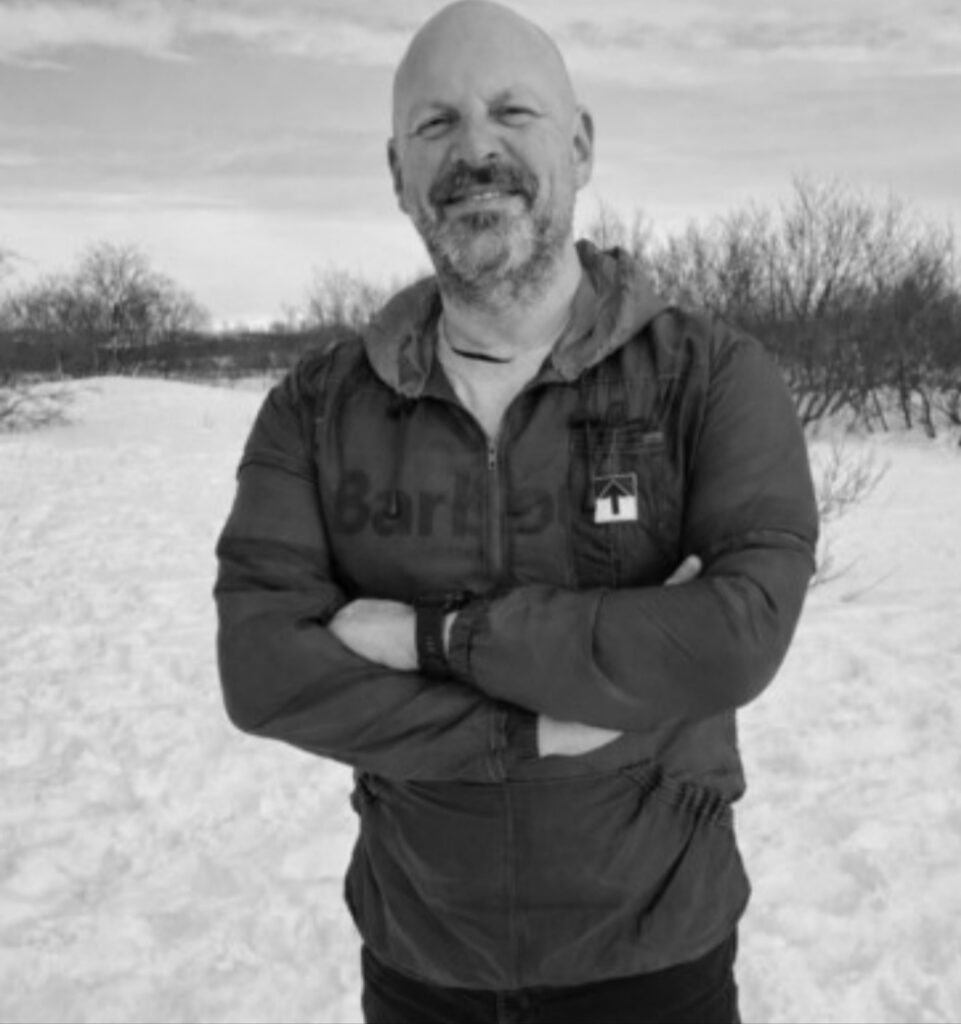
Joseph Sabien: Finding Purpose, Challenging Convention and Creating Sea Sanctuary
Some founder stories begin with a business idea. Others begin much earlier, through experiences that shape how a person sees the world, understands people and eventually chooses to create change.
Joseph Sabien’s journey brings together childhood adversity, a lifelong connection with the sea, marine studies, counselling, NHS crisis intervention and an enduring belief that mental-health care can be approached differently.
His work led to the creation of Sea Sanctuary, an innovative approach that brought together professional therapeutic support and the marine environment. What began as an unconventional idea developed into an organisation that worked with healthcare services, the police and local authorities, received national recognition and secured significant grant funding.
But behind the organisation is a deeply personal story.
In this YES Founders’ Stories interview, Joseph reflects openly on his childhood, the experiences that shaped his understanding of empathy and human connection, his time working within the NHS, the thinking behind Sea Sanctuary, the challenges of building something that challenged convention, and the principles that continue to guide him.
Rather than simply focusing on achievements, this conversation explores the person behind the work — and what his journey can teach other founders, healthcare professionals and anyone seeking to create meaningful change.
Here is Joseph Sabien’s story, in his own words.
1. Before Sea Sanctuary: The Child Behind the Founder
Sania Naz: Joseph, before Sea Sanctuary and your work in mental health, who were you growing up? What kind of child were you, and what experiences shaped the person you are today?
Joseph Sabien: This is a particularly thought-provoking question and I have spent much time, since reading it, deciding how I would respond.
In truth, my upbringing was both unconventional and sad, in equal measure. I spent my formative years in care (as a so-called ‘looked after child’) under the care of the local authority in Richmond-Upon-Thames. My children’s home, Grafton Close, remains one of the most notorious homes of its time, and I am proud to say that I am a survivor.
I was placed in the home as a result of my mother being unable to care for me and her propensity towards violence and neglect. These days, such people are referred to as narcissists – with a distinct inability to communicate love, feeling or real kindness. After several years of this, I was placed under a protection order and placed in care. The experiences there were considerably worse than anything my mother did, or could have done.
In terms of who I was – I can say with much certainty that I was traumatised but without the useful accompanying understanding of knowing how this would impact and influence my behaviours, choices and significant decisions. I was also a kind and curious child, who enjoyed being around animals and exploring the world – I particularly enjoyed being in the outdoors.
According to the numerous reports and childhood assessment that were untaken by psychologists and psychiatrists, I was considered highly intelligent, adaptable and resilient. Sadly, the intelligence didn’t manifest itself, in any meaningful way, until much later on in my life. As such, before this occurred, I was often unstable, experienced challenging inter-personal relationships, frequently made bad choices and found life extremely challenging.
I often felt estranged from life and found solace in the natural environment, mainly the sea, and anywhere that afforded me a sense of peace.
All this aside, I cared deeply for people who I deemed to be struggling, broken, lonely or in crisis (naturally from the perspective of a child). As a casual observation and unbeknown to me at the time – such people were mirrors to my own sadness. Fortunately, this passion, however born, has stayed with me throughout my life and formed the basis for my work later in life. In truth, I wouldn’t change anything as my earlier life experiences have resulted in highly developed empathy, being able to authentically connect with people, and to be alongside with humility and compassion.
2. From the Sea to Supporting People
Sania Naz: You originally studied Marine Studies before later training in counselling and crisis intervention. What happened in your life that led you from the sea to supporting people through some of their most difficult moments?
Joseph Sabien: Nothing has led me from the sea – it remains a central feature and focus to my life both professionally and indeed personally.
My journey studying marine operations was about understanding how the marine environment would fit into my life. In other words, it was an attempt at being around the sea, in some capacity, alongside developing a meaningful career. This extended to also studying commercial diving (HSE1) to spend time under the water, as often as possible, whilst travelling to remote places and, crucially, met my need for excitement, danger and companionship through shared experiences.
Ultimately, neither of these career aspirations actually provided what I needed. Whilst they certainly took me to the sea – they didn’t offer any therapeutic gain. The gain I needed was repeatedly discovered through the voluntary work in a hospice and care home that ran alongside them, as a separate exercise.
Little by little, I noted within myself a need to help people more – this was where I found a sense of purpose and meaning. Once I had realised this, I decided to find appropriate training and to work in an environment where these new skills could be best utilised.
3. The NHS Experience That Changed His Perspective
Sania Naz: During your years working in NHS crisis intervention, was there a particular experience or individual that changed the way you understood mental health and recovery?
Joseph Sabien: Working within the NHS was an invaluable experience for me. Whilst I certainly observed brilliant clinicians at work, I also began to witness the limitations of large organisations, certainly in relation to how people in acute mental health crisis are supported and treated.
I noted that new approaches were often instantly dismissed unless supported by NICE or a strong evidence base for their use. On the face of it, whilst this might seem appropriate or justified, in reality, it drove care planning to work, almost exclusively, from the clinical model; diagnosing and treating. I saw little evidence of consultation with the people being supported and in treatment, little evidence of the use of the bio-psycho-social model of care or for new approaches to be gently explored or introduced. My ‘felt-sense’ told me this was inherently incorrect and morally wrong.
The most memorable encounter was with a man who was experiencing social isolation, anxiety and depression. I recall him being housebound, unable to work, unable to function and at significant risk of suicide. The care plan was quite clear in terms of an approach but had not taken into consideration the significant level of trauma in his life and how, in reality, it was playing out. He was heavily medicated and had been in therapy for over six-months, without much in the way of improvement.
I decided to research the available treatments in the UK (not necessarily NICE recommended modalities) and discovered a more unusual approach, gathering momentum and a growing evidence-base for its use. Upon further investigation and the production of a mini business case for funding, I approached my manager and suggested using ‘Rewind Therapy’ (part of the Human Givens approach). He reluctantly agreed but has a highly qualified CPN, was clearly curious about whether a new approach might succeed where other approaches had achieved almost nothing.
In short, within four-sessions, the man was able to regain much of his life, better understood the impact of multiple traumatic experiences, reported better sleep and requested to titrate down from his PRN medication (diazepam).
Within two-weeks of that experience, I recognised I no longer wanted to be part of a system that merely maintained poor mental health, supported limited approached, was archaic in treatment approaches and had clearly forgotten the importance of placing the patient at the centre of care decisions and care planning.
4. How Sea Sanctuary Began
Sania Naz: Sea Sanctuary is a very distinctive idea that combines the healing environment of the sea with mental health support. How did that vision first come to you, and what inspired you to turn it into reality?
Joseph Sabien: Whenever I have sought it out, the sea has always offered me a sense of peace and healing. I believe the development of Sea Sanctuary was an inevitable step for me.
After my experience of the NHS, I distinctly remember spending hours in silence and reflection considering the options open to people who were struggling with their mental health. I worked through, systematically, all of the treatments I knew and made a comprehensive list or their strengths and weaknesses, from my perspective. I then looked at Europe and across the globe to see how mental ill health was viewed and managed. It was an exhausting exercise.
I then asked myself a question – what do I personally need when I am low? I understood that the process of recovery was different for everyone but what were the common features that stood out? My initial list concluded this: we all need authentic human connection, space to reflect, safety, to understand our purpose and meaning, to feel truly heard and crucially, to feel valued, just as we are – warts and all, as they say.
I then considered what was the best environment in which this could occur. I decided to use what I knew; the sea. But rather than be beside the ocean, for a more immersive experience, I felt a boat would offer considerably more. And it certainly did.
After two further years of consultation, setting up a charity, fundraising and building a team, several care programmes (based on CBT and Mindfulness) and developing policies and procedures, I was successful in securing funding to buy our first yacht, Leopard.
It is noteworthy to mention that this was achieved at a time when the natural environment was still considered novel in healthcare, without a team, with no prior knowledge of setting up a charity and zero fundraising experience.
Nevertheless, I recognised that if I wanted to see positive change for vulnerable people, I would need to achieve it on my own. That is exactly what I achieved.
5. Building an Idea That Challenged Convention
Sania Naz: Building an innovative service is rarely straightforward. What were some of the biggest challenges you faced in establishing Sea Sanctuary, and how did you overcome them?
Joseph Sabien: Sea Sanctuary was pure innovation and went against convention in every way. In 2006, use of nature and the marine environment was almost non-existent other than a few offerings across the globe. It certainly hadn’t been considered as a meaningful intervention capable of producing positive change and better scores through validated evaluation methods (e.g. GAD-7).
It was considered high risk by funders and commissioners alike and required extensive work in relation to safeguarding, assessment and risk assessment. Not only was there a requirement to ensure each person was assessed appropriately to their needs but the residential element (four-days offshore on a classic yacht) had to be carefully planned, taking into consideration the group members, diagnosis, age, gender and personality ‘type’.
Initially, I was a team of one – me. As such, I was responsible for writing the programmes, admin, assessments, liaising with healthcare professionals, carrying out risk assessments, staff recruitment and training and evaluation. Additionally, I was responsible for the project management of the refit of our newly acquired yacht, Leopard. This in itself was a monumental task as I possessed almost no experience of yachts certainly none in relation to the refit of a classic wooden boat.
Alongside this was the constant requirement to justify our approach and to manage the numerous criticisms and scrutiny of a new approach – this, in isolation of everything else, was exhausting as the comments often developed into a personal attack on my professionalism and sanity!
In terms of overcoming the challenges, which I did, it was sheer determination coupled with the knowledge that if I failed, the service would never see the light of day. I was determined to bring something new to a field (mental health) that had become stale, ineffective and often counter-intuitive.
6. The Achievement That Mattered Most
Sania Naz: Sea Sanctuary has received national recognition and worked alongside organisations such as the NHS, Devon & Cornwall Police, and local authorities. Looking back, which achievement has been the most meaningful to you, and why?
Joseph Sabien: Frankly speaking, whilst I am certainly proud of our numerous achievements, awards and nominations, I paid little mind to them at the time. For me, the feedback from the people who used our service was far more important. Witnessing people develop hope and have a positive experience of themselves was truly humbling and reminded me of how precious human life is. It further reinforced that much of what is put forward as effective care is merely maintaining mental ill health.
On a global perspective in relation to mental health care and treatment, it seemed we were neither savage nor wise. We seemed to have slipped into a place of poor perspective and indifference. We have forgotten the power of connection and nature and no longer seem interested in exploring new approaches. This remains as relevant today as it did in 2006.
Over the course of the Sea Sanctuary journey, I raised over £8m in grant funding and secured the single largest government grant in Southwest England. I was nominated for a Queens Award and the charity itself was the recipient of multiple awards for innovation and effectiveness.
Despite all this which ostensibly seems impressive, I was most impressed by the dedication of my team and by the courage of every single person who used our service. Each and every one was a hero to my mind and showed what the human spirit is truly capable of when provided the right therapeutic environment and encouragement. Truly awe inspiring.
In terms of a single achievement – I have but one. A simple email addressed to the charity which simply read “thank you for saving me”.
7. When Continuing Was Difficult
Sania Naz: Throughout your journey, was there ever a moment when you questioned whether to continue? If so, what helped you keep moving forward?
Joseph Sabien: The journey of both developing and sustaining the charity were marked by multiple challenges, as I’ve already touched upon. The process was all-consuming and often required working 14-16 hour days in order to create the service and once set-up, to ensure it was fit for purpose. Alongside this, I was fighting so-called Imposter Syndrome and newly diagnosed dyslexia. This was further compounded by PTSD and the internal chattering from my childhood (you will never achieve anything) which, perversely, grew louder the more I actually achieved.
So, in truth, I certainly had fleeting moments of sufficient challenge for me to question my choices. Did I believe I would actually abandon the work – absolutely not.
8. When Different Paths Finally Connected
Sania Naz: Your career has brought together healthcare, psychology, crisis intervention, and the sea. Looking back, do you feel these paths were connected from the beginning, or did they only make sense in hindsight?
Joseph Sabien: The paths of my work were principally unrelated for the most – certainly in terms of how they were introduced and experienced. In hindsight, I can see how they were interlinked and I can certainly see how they complement one another – they certainly make for excellent companions.
I recall somewhere in 2017 (I made a note which included the year) that I believed Sea Sanctuary had created a superb formula for improving wellbeing. This was in part due to the feedback received but also, repeatedly, the evaluation showed remarkable results, almost unheard of in our sector. The combination of the marine environment, superb therapists, a high-quality intervention and the willingness of people to trust the process had created something that steered people away from crisis, offered hope and equipped people with the skills to manage their own mental health rather than relying on services and healthcare professionals.
9. The Values Behind the Decisions
Sania Naz: Beyond your professional roles and achievements, what values have guided the decisions you have made throughout your life and career?
Joseph Sabien: I have often followed difficult to navigate roads – both in my personal and professional life. Sometimes out of choice and other times, by mistake.
Despite this, I have always acted with empathy, integrity, compassion and kindness. I would be the first to admit this has presented certain internal conflicts and external disagreements, particularly when faced with people who seemed more interested in budget lines than preventing misery or preventing a suicide.
Indeed, this remains my biggest trigger and challenge when attempting to liaise with services and people who seem detached from human suffering. Such people (with machine minds and machine hearts) as quoted in the film, the Great Dictator, are my greatest test; to maintain my professionalism, objectivity and empathy.
10. Advice for the Next Generation of Founders
Sania Naz: If a young founder or mental health professional reading this interview wanted to create meaningful change in the world, what advice would you give them from your own journey?
Joseph Sabien: Increasingly, we live in a world where people seeking meaningful change are discouraged. Unless commercially focused, system disruption and new approaches for the sake of creating a more tolerable world play second fiddle to profit. This is a view that I find most abhorrent.
I would say to anyone – never compromise on something that is driven by the desire to help others. Seek out similar minded people, be ahead of the curve and always involve the voices of the disenfranchised and the people with lived experience. I would say pace yourself, believe in yourself and never cut corners. Remember to reflect often, dream big and try to ignore people who don’t hold the same values as you – the world is full of such people. Lastly, never let the voice of reason be drowned out by the roar of fear. Hold firm.